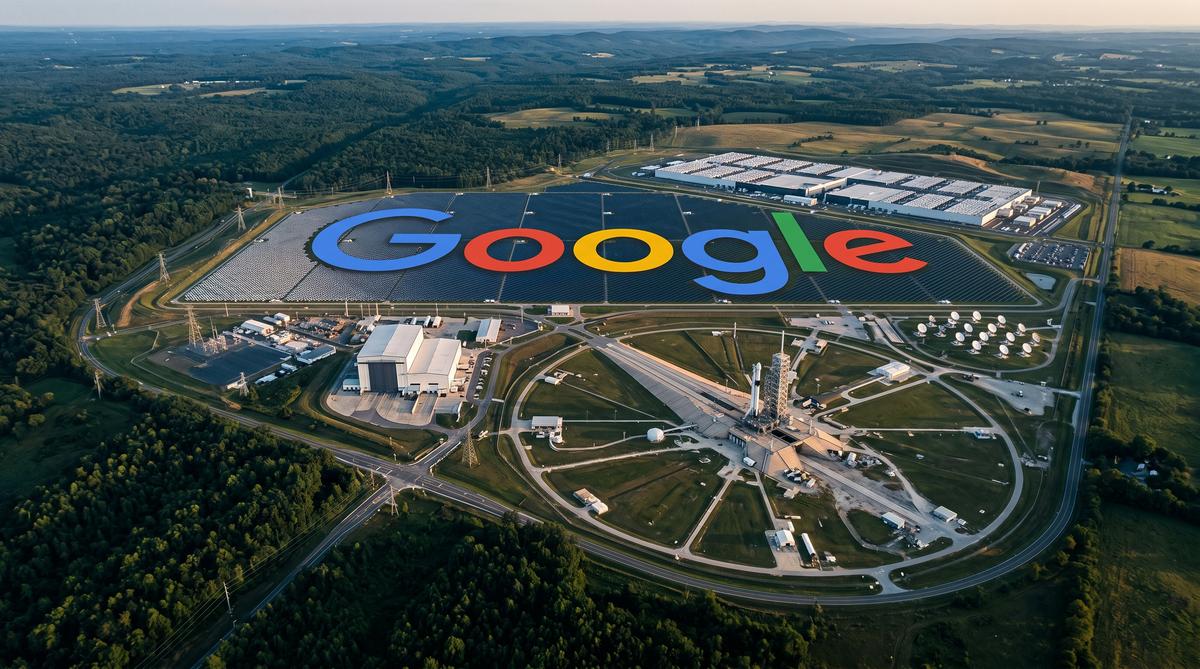
Google just agreed to pay SpaceX $920 million every single month for access to AI compute infrastructure. The deal, disclosed through a public filing and reported by The Daily Star, grants Google approximately 110,000 NVIDIA GPUs, CPUs, and related components. Running from October 2026 through June 2029, the contract totals roughly $30 billion — one of the largest AI infrastructure agreements ever made public.
TL;DR: Google signed a deal to pay SpaceX $920 million per month for access to approximately 110,000 NVIDIA GPUs, CPUs, and related components, according to a filing reported by The Daily Star. The contract runs from October 2026 through June 2029, totaling roughly $30 billion and marking one of the largest AI compute agreements ever disclosed.
What Are the Key Terms of the Google-SpaceX Compute Deal?
The agreement between Google and SpaceX centers on a straightforward infrastructure lease. Google will pay SpaceX $920 million monthly to access roughly 110,000 NVIDIA GPUs, CPUs, memory modules, and associated data center components housed in facilities formerly operated by xAI. The contract term begins in October 2026 and concludes in June 2029, spanning approximately 33 months. Over the full duration, total payments will reach roughly $30 billion, according to Euronews.
This is not a partnership or joint venture. It is a capacity lease. Google rents hardware it does not own to train and run its Gemini models and other AI workloads. SpaceX, now merged with xAI, acts as the infrastructure provider. The deal structure resembles traditional cloud computing contracts where hyperscalers lease bare-metal servers from third-party data centers.
Why does this matter? Scale.
At $920 million per month, this single contract generates more annual revenue for SpaceX than many mid-sized technology companies earn in total. The filing, reported by Bloomberg and confirmed by multiple outlets including Business Insider and The Daily Star, reveals the financial terms openly. Google gains compute. SpaceX gains revenue. The arrangement benefits both parties ahead of SpaceX’s anticipated initial public offering.
Why Does Google Need 110,000 GPUs From SpaceX?
Google operates its own custom AI chips called Tensor Processing Units, or TPUs, alongside NVIDIA hardware in its data centers. So why would a company with massive internal infrastructure spend over $11 billion per year renting someone else’s GPUs? The answer comes down to demand outpacing supply.
Training large language models like Gemini requires enormous clusters of GPUs running in parallel for weeks or months. Each new model generation demands more compute than the last. According to Wccftech, xAI was barely using its compute capacity after the SpaceX merger, leaving massive GPU clusters sitting underutilized. Google recognized an opportunity to absorb that idle capacity.
The numbers tell the story. 110,000 NVIDIA GPUs represent a substantial fraction of global AI compute availability. For comparison, Meta Platforms disclosed owning approximately 350,000 NVIDIA H100 GPUs as of late 2024. Google renting 110,000 additional units from SpaceX effectively increases its available training capacity by a significant margin without waiting years to build new data centers.
Building takes time. Renting is faster.
Google faces competitive pressure from OpenAI, Anthropic, Meta, and others in the foundation model race. Securing compute now, rather than in 2028 when new data centers come online, provides an immediate advantage. The SpaceX deal lets Google scale its AI training workloads almost instantly, paying a premium for speed and certainty of supply.
How Does This Deal Connect to the xAI and SpaceX Merger?
In early 2025, Elon Musk’s artificial intelligence startup xAI merged with SpaceX in a move that brought xAI’s GPU clusters, data centers, and technical staff under the SpaceX corporate umbrella. Before the merger, xAI had assembled massive compute infrastructure to train its Grok models, including the Colossus supercomputer cluster. After the merger, that infrastructure became a SpaceX asset.
According to Wccftech, xAI abandoned the mixed GPU configuration at Colossus 1, which had combined different NVIDIA models in ways that created operational complexity. The merger allowed SpaceX to consolidate and standardize the hardware, making it suitable for leasing to external clients like Google and Anthropic. What was once a proprietary training facility became a commercial cloud offering.
This transformation explains the business logic. SpaceX, primarily a rocket and satellite company, now operates one of the world’s largest GPU clusters as a revenue-generating asset. The xAI merger provided the hardware. The Google and Anthropic deals provide the customers. SpaceX provides the operational backbone.
The merger created something unexpected. A cloud provider.
Before this deal, SpaceX had no meaningful presence in the cloud computing market. Now, with two major contracts generating over $1 billion in monthly revenue combined, SpaceX has become a significant player in AI infrastructure. The Google deal alone contributes $920 million monthly, and the Anthropic agreement adds further revenue on top, as reported by Vietnam.vn.
What Role Does Anthropic Play in SpaceX’s Compute Business?
Anthropic, the AI safety research company behind the Claude model family, signed a separate compute agreement with SpaceX before the Google deal was announced. According to Vietnam.vn, the Anthropic transaction paved the way for Google’s agreement, establishing SpaceX as a credible provider of large-scale AI compute capacity. Anthropic’s willingness to rent infrastructure from SpaceX validated the business model.
Anthropic needs compute for the same reasons Google does. Training Claude and competing with GPT and Gemini requires massive GPU clusters. Rather than building entirely from scratch or relying solely on Amazon Web Services and Google Cloud — where Anthropic already has partnerships through investments — the company chose to diversify its compute sources by leasing from SpaceX.
Anthropic went first. Google followed.
The sequence matters. SpaceX needed proof that external AI companies would pay for access to its xAI-derived infrastructure. Anthropic provided that proof. Once the Anthropic deal demonstrated demand and technical feasibility, Google entered negotiations with confidence that the hardware and operational setup could handle enterprise-grade workloads.
Together, the Anthropic and Google contracts transform SpaceX’s compute division from a cost center into a major revenue stream. According to multiple sources including DiarioBitcoin and CryptoAdventure, these agreements position SpaceX as an infrastructure provider capable of serving multiple large clients simultaneously, a critical requirement for its upcoming public market debut.
How Does This Agreement Affect the Upcoming SpaceX IPO?
SpaceX is expected to conduct its initial public offering in the near future, with some reports suggesting the IPO could set records for valuation. The Google deal, announced shortly before the planned offering, significantly strengthens SpaceX’s financial profile for potential investors. A guaranteed revenue stream of $920 million per month through June 2029 provides predictable, recurring income that IPO underwriters can model with confidence.
According to Poinformowani.pl, the deal ensures SpaceX will generate substantial revenue from its AI compute division regardless of fluctuations in its core space launch and Starlink businesses. Investors evaluating SpaceX will see a diversified company with revenue from government contracts, satellite internet subscriptions, and now cloud computing services. This diversification reduces perceived risk.
Recurring revenue commands premium valuations.
The timing is deliberate. Announcing a multi-year, $30 billion contract weeks before an IPO creates favorable market conditions. Potential investors can underwrite the offering knowing that SpaceX has locked in Google as a tenant for nearly three years. The Anthropic deal adds further revenue visibility. Combined, these contracts may help justify a higher IPO price and generate stronger demand from institutional investors.
Business Insider notes that the compute deals also signal SpaceX’s ability to monetize the xAI merger quickly. Rather than sitting on acquired infrastructure, SpaceX converted xAI’s GPU clusters into revenue-generating assets within months. This operational agility demonstrates management competence — a quality IPO investors value highly.
What Happened to xAI’s Colossus 1 GPU Cluster?
xAI’s original Colossus 1 GPU cluster became a liability rather than an asset, primarily due to its heterogeneous hardware configuration that created more problems than it solved. According to Wccftech, xAI abandoned Colossus 1’s “messy GPU mix” as the cluster suffered from inefficiencies stemming from mixed NVIDIA GPU generations that complicated workload management and reduced overall compute performance. Rather than continuing to pour resources into fixing compatibility issues, SpaceX decided to lease the infrastructure to external clients who could better utilize the capacity. The cluster sat largely idle. With xAI barely using any of the available compute capacity, the hardware represented billions in stranded assets generating zero return.
The decision to pivot from internal AI training to leasing infrastructure reflects a broader strategic shift following the SpaceX-xAI merger. Instead of competing directly with established AI labs, the merged entity chose to monetize its hardware investments through rental agreements with companies desperate for GPU access. Google and Anthropic became the primary beneficiaries of this strategy, gaining access to roughly 110,000 NVIDIA GPUs that would have otherwise remained underutilized. This approach generates immediate revenue while SpaceX prepares for its anticipated IPO. The monthly payments from Google alone — $920 million — dwarf what xAI could have generated through its own AI products in the same timeframe.
The technical challenges of Colossus 1 were not trivial. Mixed GPU architectures create synchronization bottlenecks, memory allocation conflicts, and thermal management issues that degrade training efficiency across the entire cluster. For a company like xAI, which needed to train competitive large language models, these inefficiencies meant longer training times and higher costs per model iteration. Leasing the hardware to Google, which has extensive experience managing diverse GPU fleets through its own cloud infrastructure, transforms a technical weakness into a revenue stream. Why fix what someone else can use more effectively?
How Does This Deal Compare to Other AI Infrastructure Agreements?
The Google-SpaceX agreement, valued at approximately $30 billion over its full duration, dwarfs virtually every other AI infrastructure deal publicly disclosed to date. For comparison, Microsoft’s multi-billion dollar investment in OpenAI infrastructure and Amazon’s $4 billion Anthropic partnership both involved equity stakes and long-term cloud commitments, but neither approached the sheer monthly cash flow of $920 million that Google committed to SpaceX. The Anthropic deal with SpaceX, signed shortly before the Google agreement, established the pricing precedent that Google ultimately matched. According to sources cited by Vietnam.vn, SpaceX followed the Anthropic transaction with this Google deal, creating a dual-revenue stream from the same underlying hardware base.
What makes this deal structurally different from typical cloud agreements is its fixed monthly payment model rather than consumption-based pricing. Most cloud compute arrangements charge based on actual usage — customers pay for GPU-hours consumed. Google’s commitment to pay $920 million monthly regardless of utilization represents a capacity reservation that guarantees SpaceX predictable revenue. This structure benefits both parties: Google secures guaranteed access to 110,000 NVIDIA GPUs without competing for spot availability, and SpaceX locks in revenue that strengthens its financial position ahead of its planned IPO. The deal runs from October 2026 through June 2029, giving Google nearly three years of dedicated compute access.
Historical context makes the scale even more striking. NVIDIA’s entire data center revenue in fiscal year 2024 was approximately $47 billion. Google’s commitment to pay SpaceX roughly $11 billion annually represents a significant fraction of that total market. The deal essentially creates a parallel GPU cloud operated by SpaceX outside traditional cloud provider infrastructure. Is the AI compute market large enough to sustain multiple such agreements simultaneously?
The following table compares major AI infrastructure deals:
| Deal | Parties | Estimated Value | Duration | Structure |
|---|---|---|---|---|
| Google-SpaceX | Google / SpaceX | ~$30 billion | Oct 2026 - Jun 2029 | Fixed monthly payment |
| Microsoft-OpenAI | Microsoft / OpenAI | ~$13 billion | Multi-year | Equity + cloud credits |
| Amazon-Anthropic | Amazon / Anthropic | ~$4 billion | Multi-year | Equity + cloud commitment |
| Anthropic-SpaceX | Anthropic / SpaceX | Undisclosed | Unknown | Compute leasing |
| Meta AI Infrastructure | Meta (internal) | ~$30 billion+ | Ongoing | Capital expenditure |
What Are the Strategic Implications for Google’s Gemini Enterprise?
Google’s decision to lease SpaceX compute capacity rather than build additional proprietary infrastructure signals a shift in how the company approaches its Gemini Enterprise product strategy. According to Business Insider, the deal specifically supports Google’s Gemini Enterprise offering, suggesting the company needs more GPU capacity than its internal data centers can currently provide to meet enterprise customer demand. By securing 110,000 NVIDIA GPUs through SpaceX, Google can offer Gemini Enterprise customers guaranteed compute availability without long provisioning delays that plague the broader cloud market. This directly addresses one of the biggest complaints from enterprise AI customers: unpredictable access to high-performance compute resources.
The timing of this deal, finalized months before the October 2026 start date, indicates Google anticipates significant growth in Gemini Enterprise demand through 2027 and beyond. Building equivalent capacity internally would require 18-24 months for site selection, construction, hardware procurement, and deployment. Leasing from SpaceX collapses that timeline to mere weeks for integration. Google essentially buys time — paying a premium for immediate capacity rather than waiting for organic infrastructure expansion. The strategy carries obvious financial costs but eliminates the risk of losing enterprise customers to competitors who can provision faster.
Gemini Enterprise faces competition from Microsoft’s Azure OpenAI Service and Amazon’s Bedrock platform, both of which offer managed access to foundation models with dedicated compute options. Google’s SpaceX deal provides a differentiator: raw GPU capacity that enterprise customers can use for fine-tuning, custom model training, and high-throughput inference workloads. This positions Gemini Enterprise not just as an API endpoint but as a full-stack AI development platform with the compute resources to match. The question is whether enterprise customers will gravitate toward Google’s offering or continue spreading workloads across multiple cloud providers.
Could This Deal Reshape the AI Cloud Computing Market?
The Google-SpaceX agreement introduces a new category of player into the cloud computing market: aerospace companies with massive GPU infrastructure. If SpaceX can generate $920 million monthly from leasing compute, other non-traditional infrastructure holders may explore similar arrangements. The deal validates the model of building GPU clusters for internal use and pivoting to external leasing when internal demand proves insufficient. According to DiarioBitcoin, this transaction “underscores the fierce race for AI infrastructure,” suggesting market observers recognize its potential to establish a new competitive dynamic in cloud computing.
The implications extend beyond SpaceX itself. The deal demonstrates that GPU capacity has become a tradable commodity with predictable pricing — roughly $8,363 per GPU per month based on the 110,000 GPU figure. This benchmark could inform future infrastructure agreements and give companies without existing cloud platforms a way to monetize hardware investments. Sovereign wealth funds, telecommunications companies, and energy providers with access to cheap power could all theoretically enter the GPU leasing market. SpaceX simply got there first with sufficient scale to attract a customer like Google.
Traditional cloud providers face a new competitive landscape. AWS, Azure, and Google Cloud previously competed primarily among themselves for enterprise AI workloads. Now SpaceX operates as a wholesale compute provider that could supply infrastructure to smaller cloud companies, AI startups, or even directly to enterprises. The vertical integration that gave major cloud providers their advantage — owning everything from networking to cooling to servers — matters less when customers primarily need raw GPU access. Could we see a future where SpaceX becomes the backbone infrastructure for a fourth major cloud platform?
Key factors that could reshape the market include:
- SpaceX’s Starlink satellite network could eventually provide direct-to-orbit compute capabilities
- The IPO will provide SpaceX capital to expand GPU clusters beyond current capacity
- Fixed monthly pricing creates budget predictability that consumption-based cloud pricing cannot match
- SpaceX’s energy costs may be lower than traditional data centers due to co-location with launch facilities
- The Anthropic and Google deals prove demand exists for non-traditional compute providers
- Enterprise customers may prefer diversified infrastructure that avoids concentration in a single cloud provider
- SpaceX’s brand recognition and Musk’s involvement attract media attention that generates organic demand
- The deal structure could be replicated by other companies with large GPU installations sitting idle
What Risks Does Google Face by Relying on SpaceX for Compute?
Google’s dependence on SpaceX for a significant portion of its Gemini Enterprise compute capacity introduces several strategic vulnerabilities that could affect service delivery and competitive positioning. The most immediate risk is operational: SpaceX has no track record as an enterprise cloud provider, and any infrastructure failures would directly impact Google’s customers. Unlike AWS or Azure, which have spent decades building redundancy and reliability into their platforms, SpaceX’s GPU clusters were originally designed for internal xAI workloads where occasional downtime carried different consequences than enterprise service-level agreements demand. A single prolonged outage could damage Google’s reputation with Gemini Enterprise customers who expect five-nines availability.
The competitive risk cannot be ignored either. SpaceX is owned by Elon Musk, who also controls xAI — a direct competitor to Google’s Gemini AI models. While the current deal structure presumably includes contractual protections, Google is essentially funding a competitor’s parent company with $920 million monthly payments that strengthen SpaceX’s financial position. Those funds could indirectly support xAI’s research and development efforts, creating a paradox where Google’s infrastructure spending helps sustain a rival. The conflict of interest is structural and cannot be fully resolved through contracts alone.
Geopolitical risks add another layer of complexity. SpaceX operates under significant government contracts and regulatory oversight, particularly through its NASA and Department of Defense relationships. Any changes in U.S. policy regarding AI technology exports, GPU access restrictions, or government priorities could affect SpaceX’s ability to honor its commercial agreements. Google experienced a version of this risk when U.S. export controls limited NVIDIA chip sales to certain countries — similar restrictions could theoretically affect GPU clusters operated by government contractors like SpaceX. What happens to Google’s Gemini Enterprise if SpaceX’s hardware becomes subject to government allocation priorities during a national security event?
Financial risks also merit attention. At $920 million monthly, Google is committing over $11 billion annually to a single infrastructure provider. If GPU prices decline significantly — as NVIDIA’s next-generation Blackwell and Rubin architectures enter production — Google could find itself locked into above-market rates for older hardware. The contract’s fixed payment structure eliminates flexibility to renegotiate as technology advances. Google is essentially making a three-year bet that current GPU pricing and availability will remain favorable, a gamble that could look expensive in hindsight if the market shifts.
Frequently Asked Questions
How long will the Google-SpaceX compute deal run?
The agreement is scheduled to run from October 2026 through June 2029, covering approximately 33 months of dedicated compute access. According to The Daily Star, Google will have access to the full 110,000 GPU cluster throughout this entire period, with the fixed monthly payment of $920 million applying across the full contract duration.
How much will Google pay SpaceX in total over the contract period?
Over the approximately 33-month contract period from October 2026 to June 2029, Google will pay SpaceX roughly $30 billion in total. Euronews reported the total deal value at 30 billion USD, making this one of the largest single-vendor cloud infrastructure commitments in technology history.
What specific hardware is Google getting access to through this deal?
Google gains access to approximately 110,000 NVIDIA GPUs along with associated CPUs, memory, and related components housed in data center infrastructure originally built by xAI. The Daily Star specified that the arrangement includes the full complement of processing units and supporting hardware necessary for large-scale AI training and inference workloads.
Does this deal mean Google is falling behind in building its own AI infrastructure?
Not necessarily — the deal reflects a strategic decision to supplement rather than replace Google’s internal infrastructure expansion. According to Business Insider, the arrangement specifically supports Gemini Enterprise capacity needs that exceed what Google’s current data center buildout can accommodate. Companies across the AI industry are simultaneously building internal capacity and leasing external resources to meet surging demand.
Summary
The Google-SpaceX compute deal represents a landmark agreement in the AI infrastructure landscape, with several key implications:
Scale and duration: At $920 million monthly from October 2026 through June 2029, the roughly $30 billion total commitment is among the largest cloud infrastructure deals ever signed, covering 110,000 NVIDIA GPUs.
Strategic pivot by SpaceX: Following the xAI merger and the abandonment of the problematic Colossus 1 cluster, SpaceX chose to monetize idle GPU capacity through leasing rather than competing directly in AI model development.
Competitive dynamics: The deal creates an unusual dynamic where Google funds a company controlled by Elon Musk, who also owns xAI — a direct competitor to Google’s Gemini AI models.
Market signal: This agreement establishes GPU compute as a tradable commodity with benchmark pricing of approximately $8,363 per GPU monthly, potentially encouraging other non-traditional providers to enter the market.
IPO positioning: The guaranteed revenue stream strengthens SpaceX’s financial profile ahead of its anticipated public market debut, demonstrating the company’s ability to generate substantial recurring revenue beyond its core aerospace business.
The full implications of this deal will unfold over the coming years as Google integrates SpaceX compute capacity into Gemini Enterprise and SpaceX approaches its IPO. Watch for developments in the competitive landscape as other companies evaluate whether to pursue similar infrastructure leasing arrangements.
Read the first part of this analysis for complete context on how this deal came together and what it means for the broader AI industry.